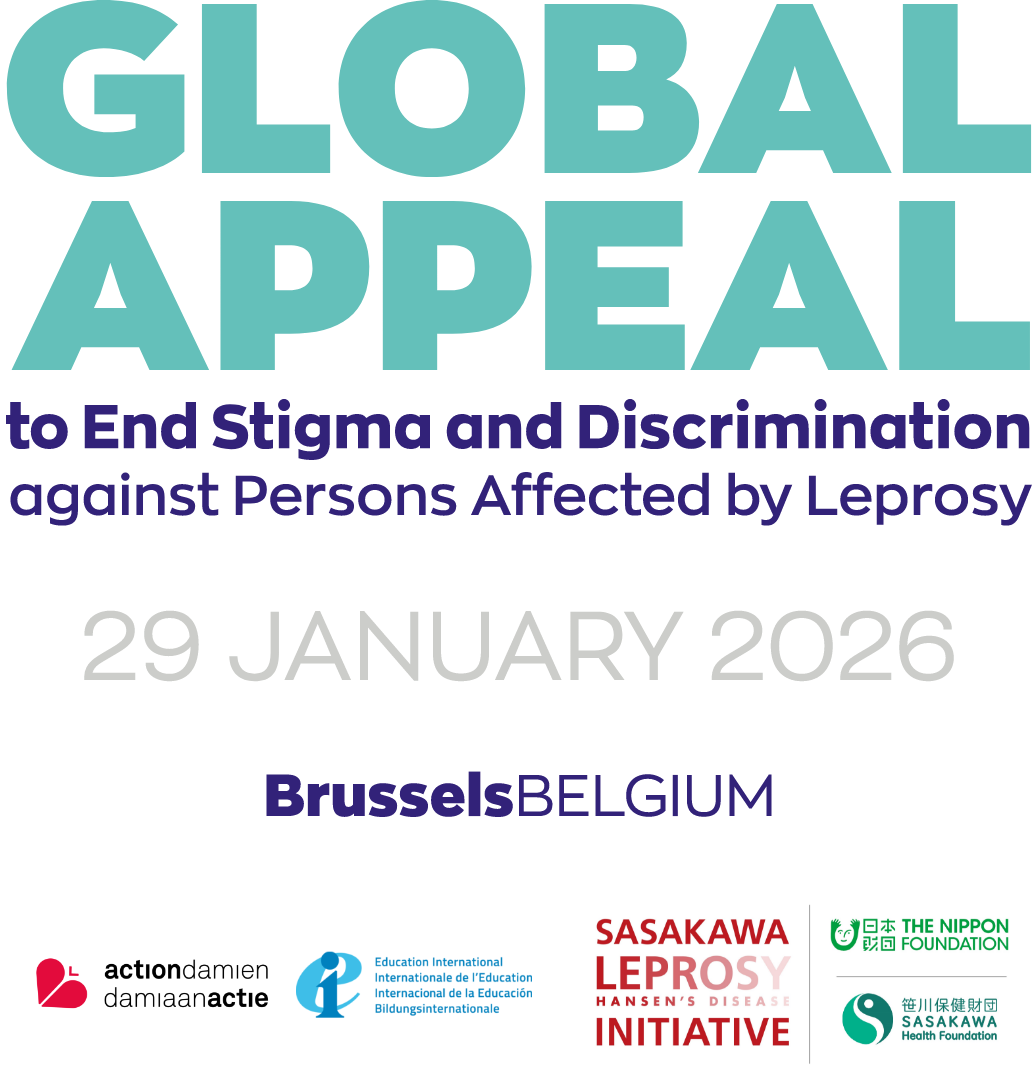
On 29 January 2026, Brussels—the capital of Belgium and the heart of the European Union—will host the launch of the Global Appeal 2026 to End Stigma and Discrimination against Persons Affected by Leprosy. Issued annually on or near World Leprosy Day, the Global Appeal is supported by individuals and organizations with a global reach who help to deliver its message far and wide.
Global Appeal 2026 will be co-hosted by Education International and the Sasakawa Leprosy Initiative, in partnership with the Damien Foundation. Focusing on the transformative power of education, this year’s Appeal highlights the vital role educators play in dispelling myths, reducing prejudice, and promoting inclusion.
The launch event will bring together persons affected by leprosy, educators, policymakers, health professionals, and civil society organizations to reaffirm a shared commitment to dignity, inclusion, and the principle of leaving no one behind.
GLOBAL APPEAL 2026 to End Stigma and Discrimination
against Persons Affected by Leprosy
Global Appeal 2026 - Opening movie
Global Appeal Launch Ceremony
MC: Dr. David Edwards, General Secretary, Education International
-
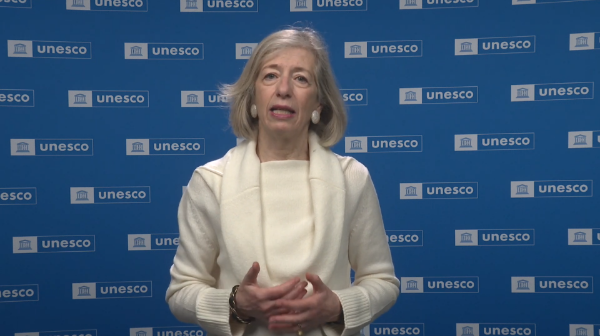
Ms. Stefania Giannini
United Nations Educational, Scientific and Cultural Organization, Assistant Director-General for Education
-

Dr. Beatriz Miranda
United Nations Special Rapporteur on the elimination of discrimination against persons affected by leprosy and their family members
-

Ms. Maguette Ndiaye
Representative of persons affected by leprosy, Chair of Oversight Committee, The 3rd Global Forum of People’s Organizations on Hansen’s Disease
-
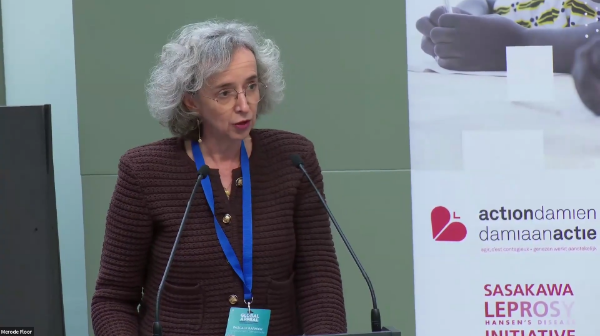
Ms. Pascale Barnich
General Manager, Damien Foundation
-
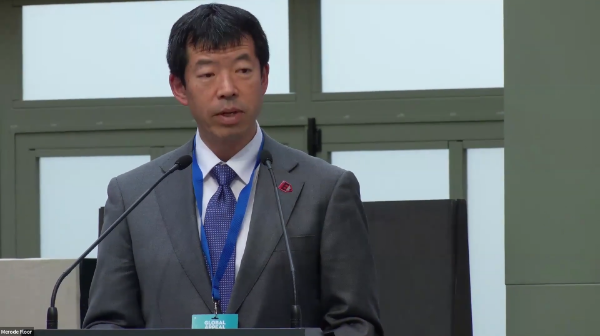
Mr. Takashi Kajiwara
Vice President, Education International, President, JTU/Japan
-
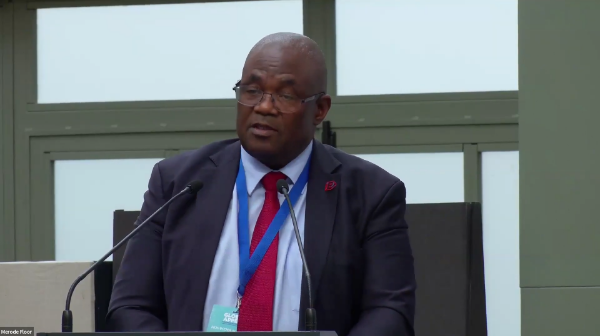
Dr. Mugwena Maluleke
President, Education International
-
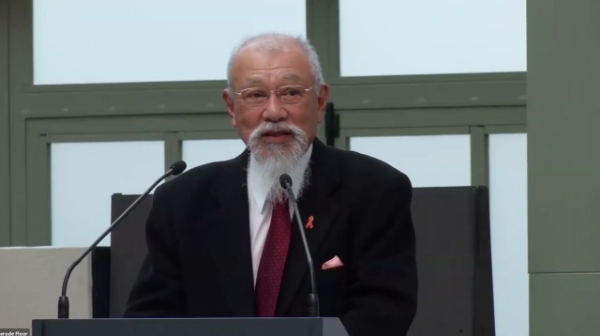
Mr. Yohei Sasakawa
WHO Goodwill Ambassador for Leprosy Elimination
-
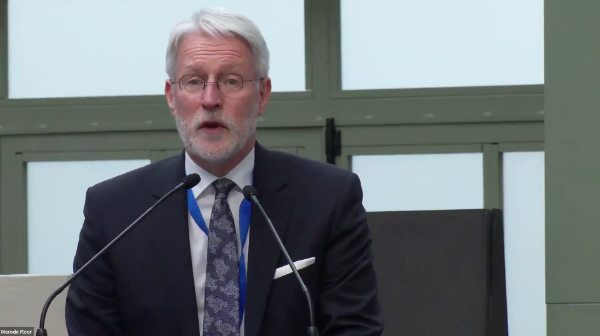
Dr. Jean-Pierre Baron Schenkelaars
Former President of the Damien Foundation
【Reading a Message from Her Majesty Queen Mathilde of the Belgians】
Launch of the Global Appeal 2026: Declaration Reading by Ms. Bimula Kujur and Dr. Mugwena Maluleke with participants
Special Seminar 1 : Perspectives from the field
Facilitator: Dr. Nanri Takahiro, Sasakawa Leprosy (Hansen’s Disease) Initiative
Update on global leprosy situation
Speakers:
・Dr. Venkata Ranganadha Rao Pemmaraju, Program Advisor for Medical Issues, Sasakawa Health Foundation, Former Acting Team Leader of WHO’s Global Leprosy Programme (Online)
・Dr. Alice Cruz, Program Advisor for Human Rights Issues, Sasakawa Health Foundation, Former United Nations Special Rapporteur on the elimination of discrimination against persons affected by leprosy and their family members (Online)
A dialogue with union leaders and persons affected by leprosy
Speakers:
Teacher union leaders from Leprosy endemic countries:
・Mr. King Ali Awudu, President, PRETAG, Ghana
・Mr. Kamala Kanta Tripathy, General Secretary, AIPTF, India
・Ms. Unifah Rosyidi, President, PGRI, Indonesia
Representative persons affected by leprosy:
・Mr. Jackson Jonathan Nyarko, Ghana (online)
・Ms. Bimla Kujur, India
・Ms. Kasmawati, Indonesia
Special Seminar 2 : Unlocking Education’s Power to
End Leprosy-Related Stigma and Discrimination
Facilitator: Dr. David Edwards, General Secretary, Education International
A dialogue with union leaders and persons affected by leprosy
A multi-stakeholder dialogue facilitated by Education International
Speakers:
・Mr. Christopher Castle, Director, UNESCO Division for Peace and Sustainable Development
・Ms. Pascale Barnich, General Manager, Damien Foundation
・Mr. Tom Vandenbosch, Global Director of Programmes, VVOB
・Dr. Paula Soares Brandão, Representative of persons affected by leprosy, Brazil
-
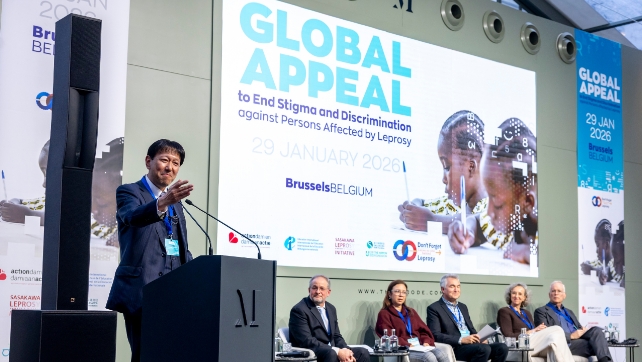
Final Remarks by Dr. Nanri Takahiro, Sasakawa Leprosy (Hansen’s Disease) Initiative
Global Appeal 2026 to End Stigma and Discrimination against Persons Affected by Leprosy
Leprosy, also known as Hansen’s disease, is an infectious bacterial illness that primarily affects the skin and peripheral nerves. Although it is curable, persons affected by leprosy and their families continue to face stigma and discrimination in many parts of the world.
Addressing the misconceptions that perpetuate this injustice requires the transformative power of education. Education plays a crucial role in shaping the values of future generations, and the right to quality education is a precondition for equity, inclusion and social justice.
As the global voice of teachers, Education International is committed to advancing education that fosters critical thinking, challenges prejudices and eliminates all forms of discrimination, within schools and across society.
Equipping teachers and education personnel with accurate knowledge of leprosy and supporting them to share this information with students can help reduce fear and misunderstanding. Such education also fosters empathy and strengthens respect for human rights.
Schools also serve as vital community hubs for health promotion and disease prevention. Promoting awareness and screening can help to identify early signs of leprosy, enabling timely treatment and reducing the risk of disability and stigma.
Education trade unions also have a vital role to play. Through training, campaigns and collaboration with health and education authorities, unions can empower educators to become champions of inclusion and health.
As educators, we will use our collective voice to promote knowledge, empathy and action, working toward a society in which the dignity of all individuals is upheld.